Cardio4D
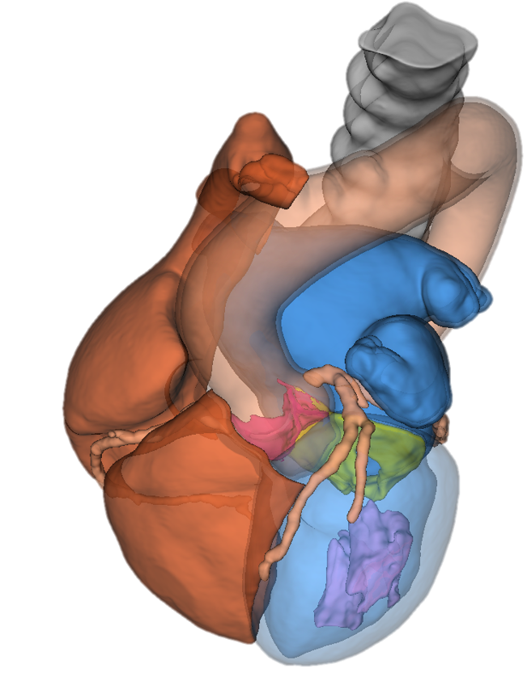
Cardio4D simplifies structural heart planning by transforming standard CT scans into predictive digital twins. By combining AI-driven reconstruction with physics-based modeling, our platform provides the mechanistic insights needed to evaluate risks and tailor patient-specific treatments. From secure upload to 4D biomechanical analysis, we offer a unified workflow designed to elevate the standard of cardiac care.
Cardio4D
Cardio4D simplifies structural heart planning by transforming standard CT scans into predictive digital twins. By combining AI-driven reconstruction with physics-based modeling, our platform provides the mechanistic insights needed to evaluate risks and tailor patient-specific treatments. From secure upload to 4D biomechanical analysis, we offer a unified workflow designed to elevate the standard of cardiac care.
Transforming Structural Heart Interventions
Our AI-powered platform delivers end-to-end cardiac analysis through three core capabilities.
Digital Twin Technology
AI-automated 3D anatomy reconstruction for accurate anatomical visualization and measurements.
Functional Prediction
Simulate biomechanical responses to optimize pre-operative planning.
Seamless Workflow
Bringing the lab to the bedside with seamless, secure, cloud-based results.
Cardio4D in Action
See how our platform addresses critical challenges in structural heart care.
AI-Driven 3D Anatomy Reconstruction for Visualization and Measurements
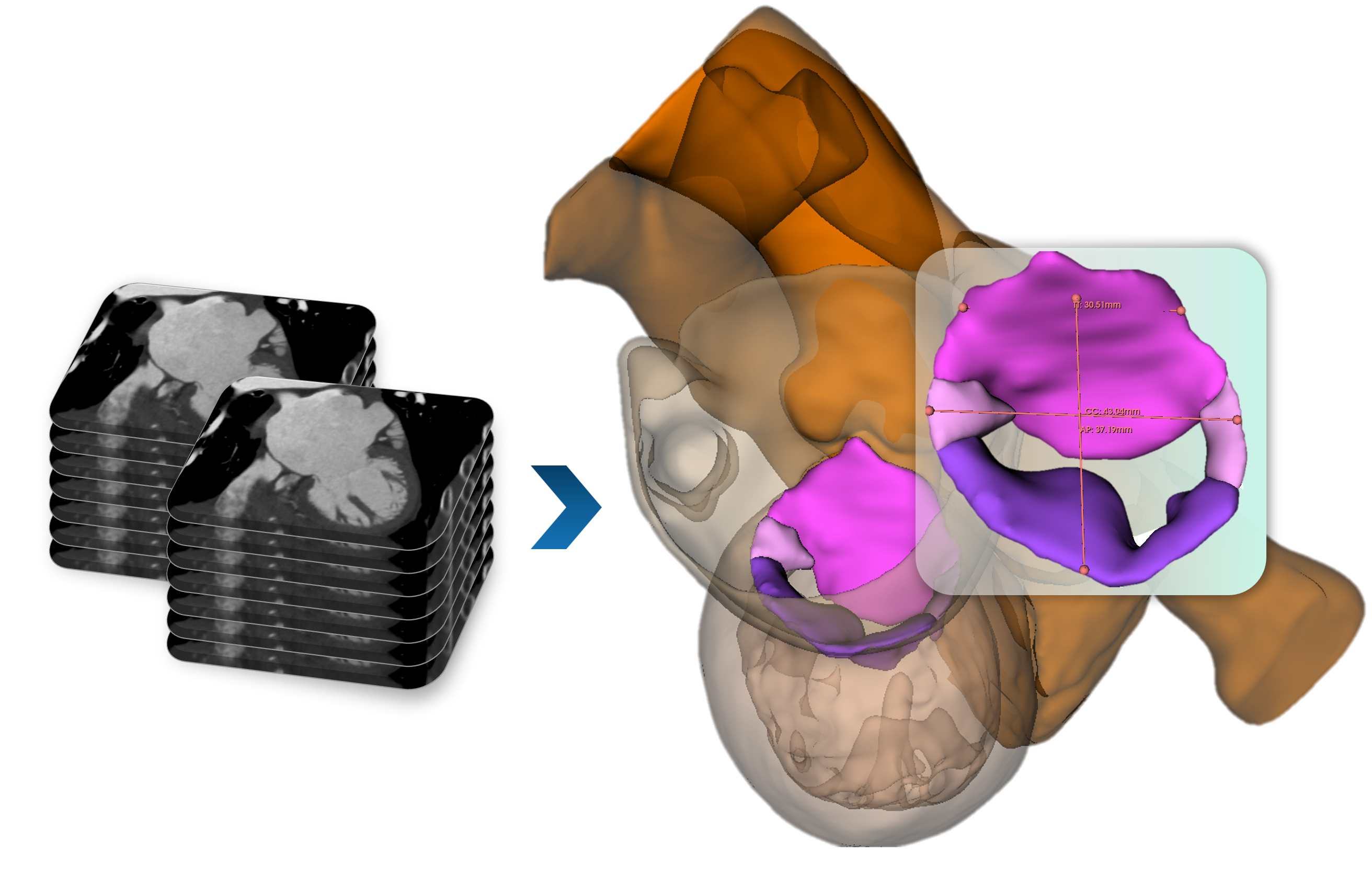
- Deep-learning segmentation with fast and accurate reconstruction.
- Automated mesh generation of the heart for all cardiac phases.
- Captures complex, hard-to-segment anatomy, e.g. valve leaflets, subvalvular structures.
- Semi-auto or manual measurements for clinical evaluations.
Thoracic Aortic Aneurysm (TAA) Rupture Risk Analysis
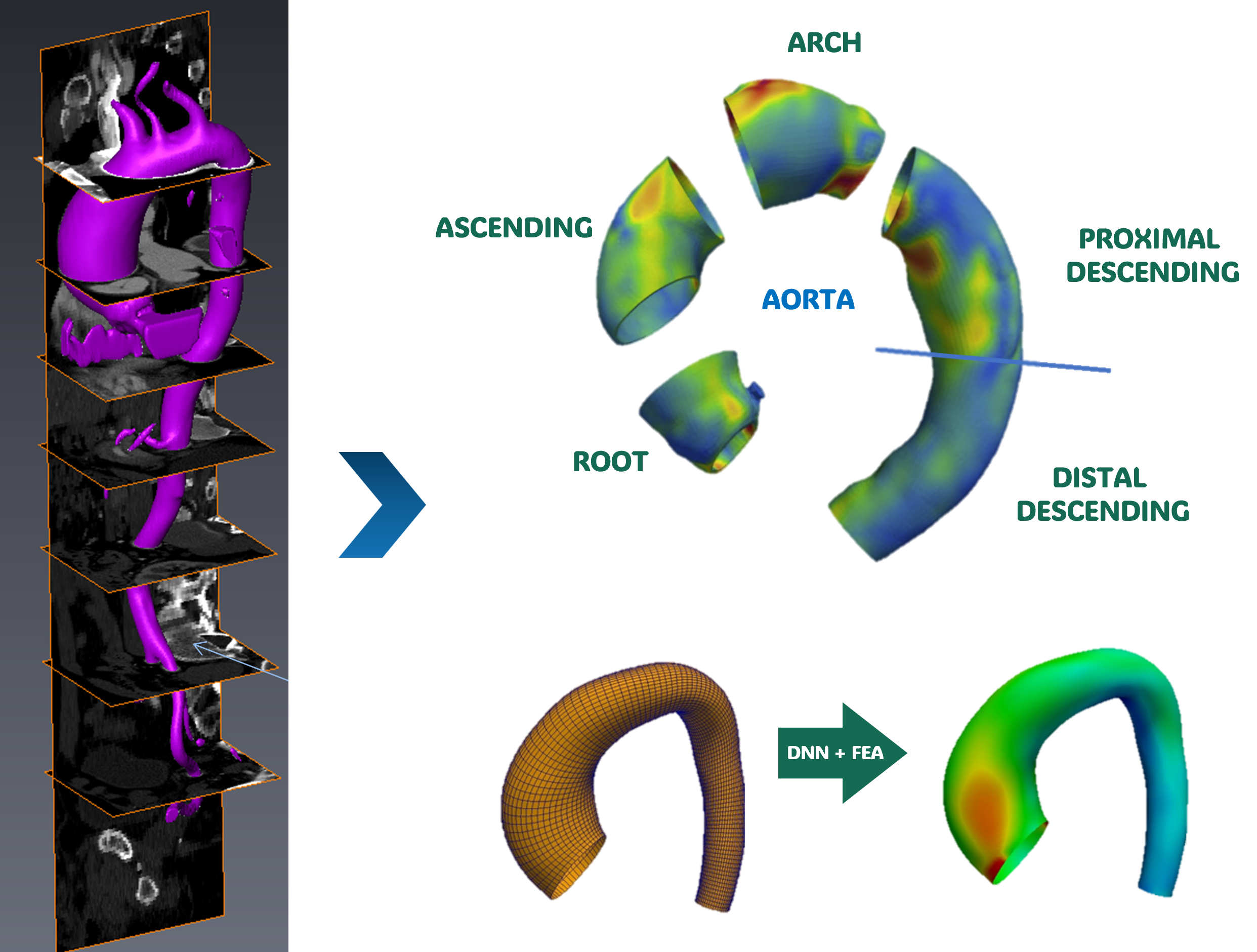
- AI-automated 3D anatomy reconstruction for accurate anatomical evaluation.
- Biomechanical simulation to quantify wall stress.
- Rupture risk prediction based on patient-specific biomechanics.
- Growth-rate assessment using CT scans from multiple time points.
- Intuitive risk reporting to support decisions on surgical repair vs continued monitoring.
Predictive Pre-operative Planning for Medical Devices (PPP)
- Transcatheter Aortic Valve Replacement (TAVR) and Transcatheter Mitral Valve Repair and Replacement (TMVR).
- Semi-auto and manual critical measurement parameters.
- Virtual implantation to assess procedure feasibility.
- Biomechanical simulation to analyze device efficacy.
- Patient-specific outcome prediction to evaluate device suitability and identify potential risks (leakage, LVOT obstruction, etc).